UX Research
Mobile-first
Agile method
Product Design
B2B
Enterprise
Global
EDP ON — Digital Workplace
25 tools. 14 countries. One place that finally made sense.
Company
Role
Senior Product Designer
Period
2017 - 2022
Team
Bliss Applications + EDP teams
Industry
Energy / Global Enterprise

25+
4,300+
Active users
Countries across
4 continents
Context
EDP's internal ecosystem had grown organically over the years — over 25 tools, each with its own identity, its own login, and its own logic. Employees across 14 countries had no single place to find what they needed, submit requests, or stay connected to the organisation. Many were still dependent on VPN just to access basic HR information. Off-site and frontline workers were the most affected.
The impact
The friction wasn't just technical. It was daily approvals stuck in the wrong tool, holiday requests submitted twice, and support tickets lost between systems. The redundancy was exhausting. And the organisation felt further away than it should.
The pain points we kept hearing
Every area had its own tool and its own way of working.
No design system. No shared onboarding. No common language.
Onboarding was slow and confusing for new employees.
VPN dependency blocked access for remote and frontline workers.
Flows were inconsistent and unclear across departments.
Employees were lost between applications, requests, and tasks.
Information was duplicated, scattered, and hard to trust.
1
Mobile-first, not mobile-adapted
The majority of EDP's workforce were off-site or frontline employees living on their phones. Designing for desktop first and adapting would have failed them from day one. The decision to go mobile-first was non-negotiable — and it shaped every interaction pattern that followed.
✓ VPN dependency eliminated
2
Organise by task, not by tool
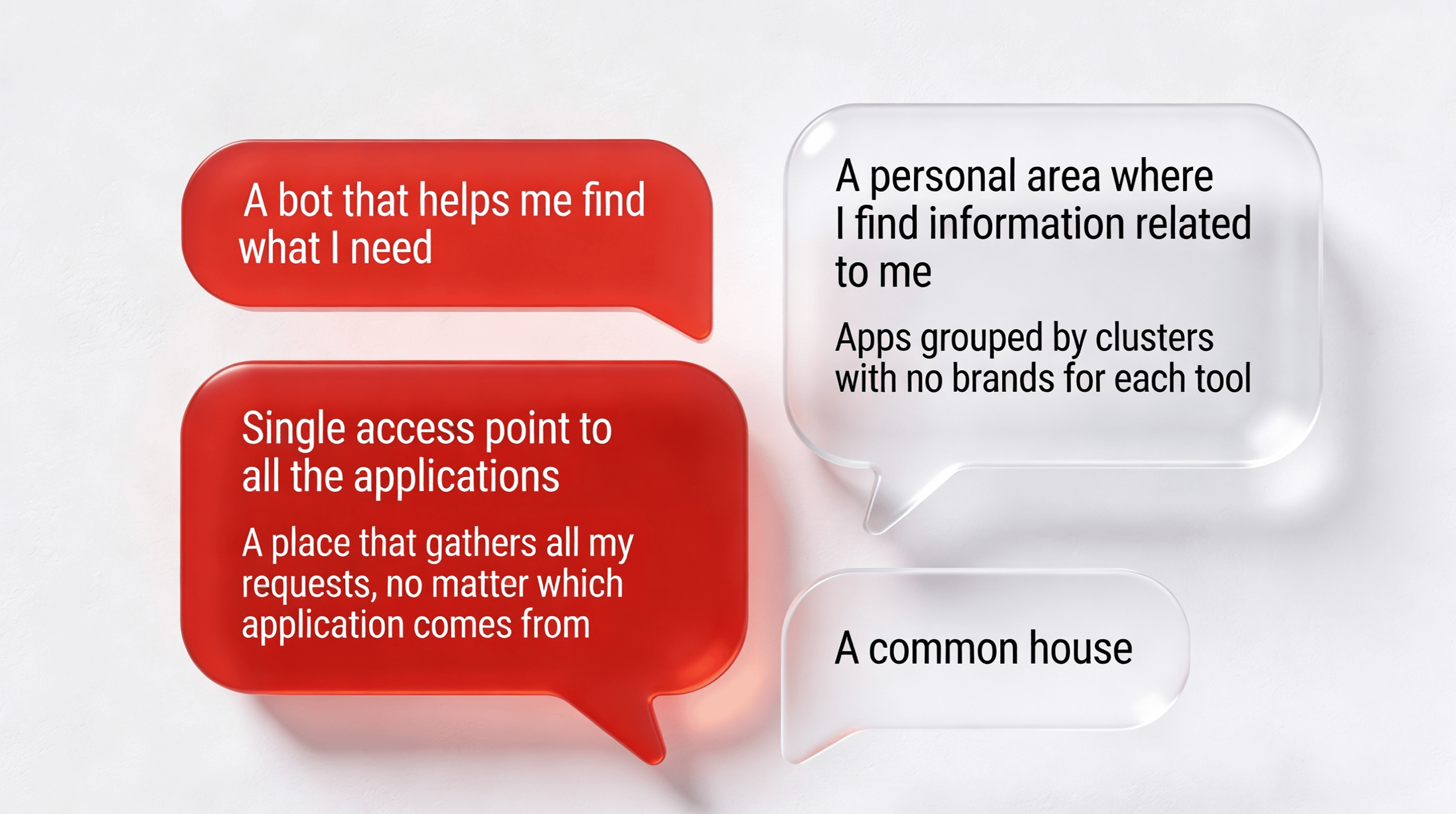
25+ tools could not simply be listed. The temptation was to mirror the existing organisational structure — one section per department, one entry per application. Instead, we clustered everything by what employees actually wanted to do: request, approve, consult, communicate, and support. The tool brand became irrelevant. The task became the entry point.
3
Global architecture, local relevance
Building one platform for 14 countries risked feeling generic and disconnected. The decision was to design a shared global architecture where content and modules could adapt to each country's needs — without breaking the consistency of the experience.
✓ Global in scale. Local in relevance
4
Build the foundations of a design system, even without one
There was no formal design system. But the scale of the project — multiple modules, multiple teams, multiple countries — made consistency non-negotiable. We defined reusable patterns, unified typography, built a component library, and created the foundations that a future corporate design system would grow from.
Research & Discovery
Led a comprehensive research phase across multiple geographies, mapping pain points common to different regions and roles. The friction was consistent: too many tools, too many logins, too little clarity.
→ Employees didn't want fewer tools. They wanted one place that knew which tools they needed.
UI Design — Mobile-first
→ One visual language, built to grow.
Information Architecture
→ A common house, as one employee described it.
Global Collaboration
Worked directly with EDP's internal teams across countries — aligning diverse business requirements under a unified UX strategy, ensuring every region felt represented in the final product.


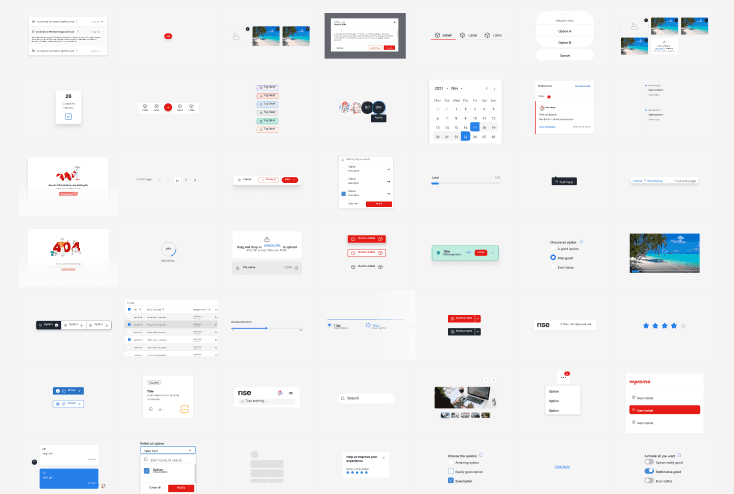
RISE — The system Worten didn't know they needed.
Dozens of product teams. Zero shared foundation. I saw the problem, proposed the solution, and led it for three years. That system is RISE.

Atlas — Where the system proved itself
Atlas is Worten’s operational backbone — running everything from site configuration to financial reporting. Upgrading it to RISE wasn’t just a visual refresh. It was proof that what we built could hold up under real complexit